
Disney Wish
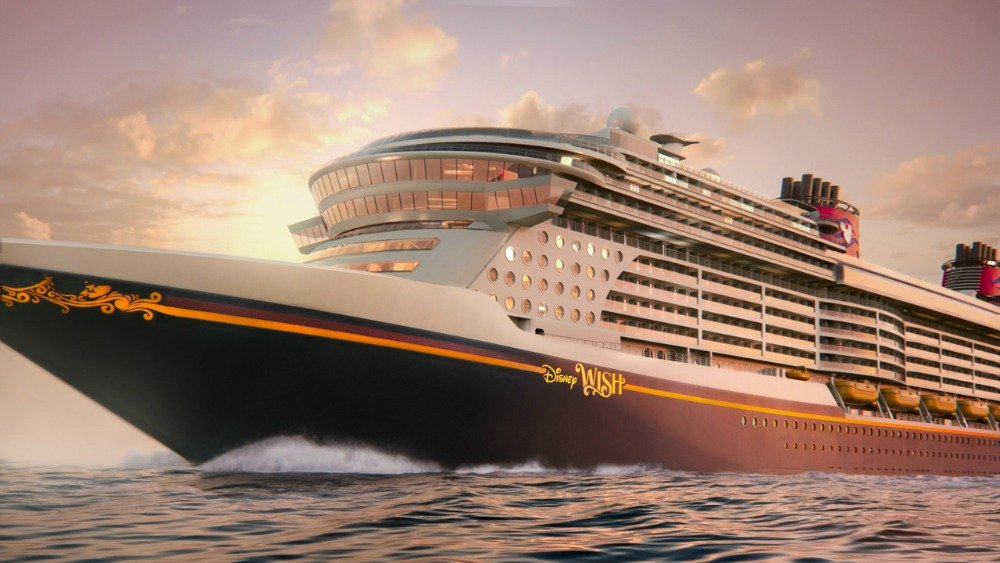
How big it is
- Launched
- 2022
- Gross tons
- 144,000
- A measure of enclosed volume, not weight.
- Guests
- 2,500
- With two guests to a cabin
- Crew
- 1,555
- Gross tons per guest
- 57.6
- Unusually roomy — this is luxury-ship territory.
- Guests per crew member
- 1.6
- Fewer guests per crew member than most large ships.
Staterooms on Disney Wish
The 19 categories Disney Wish sails with.
Interior3 categories
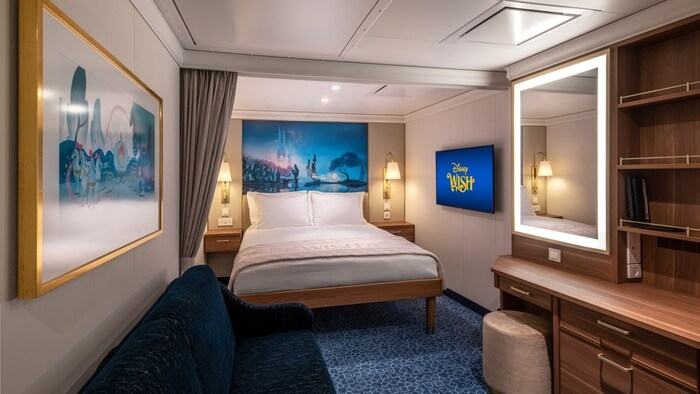
Inside Stateroom Guarantee
Checking today's price…
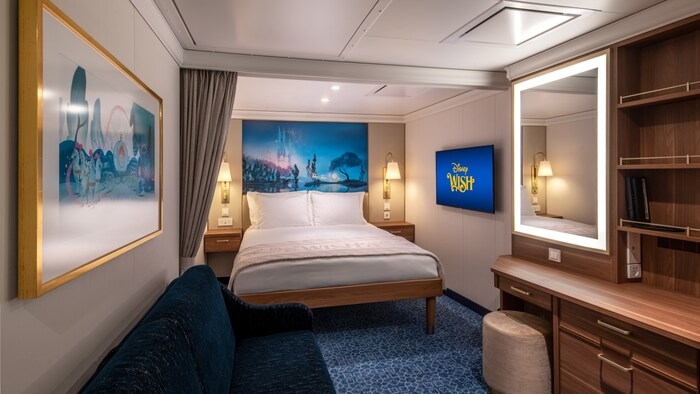
Standard Inside Stateroom
Checking today's price…
Inside
Checking today's price…
Ocean view4 categories
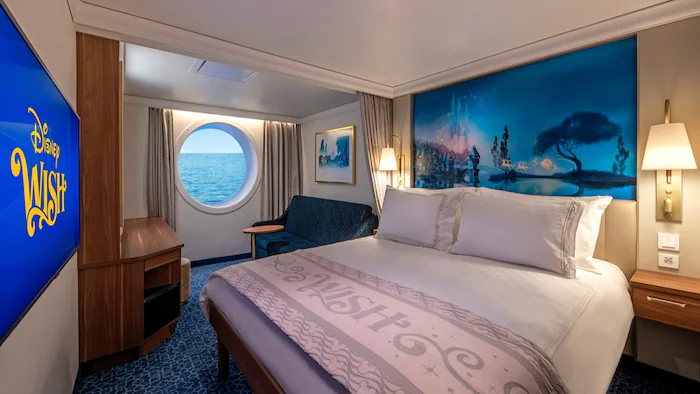
Oceanview Stateroom Guarantee
Checking today's price…
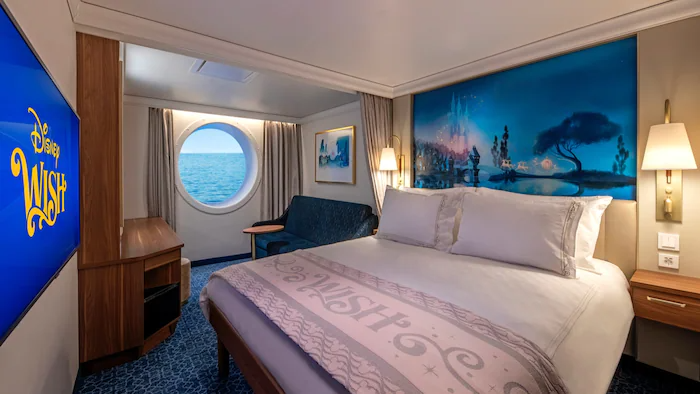
Deluxe Oceanview Stateroom
Checking today's price…
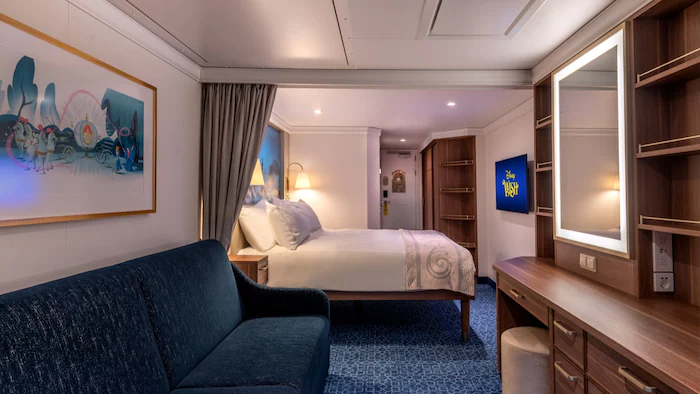
Deluxe Family Oceanview Stateroom
Checking today's price…
Oceanview
Checking today's price…
Balcony4 categories
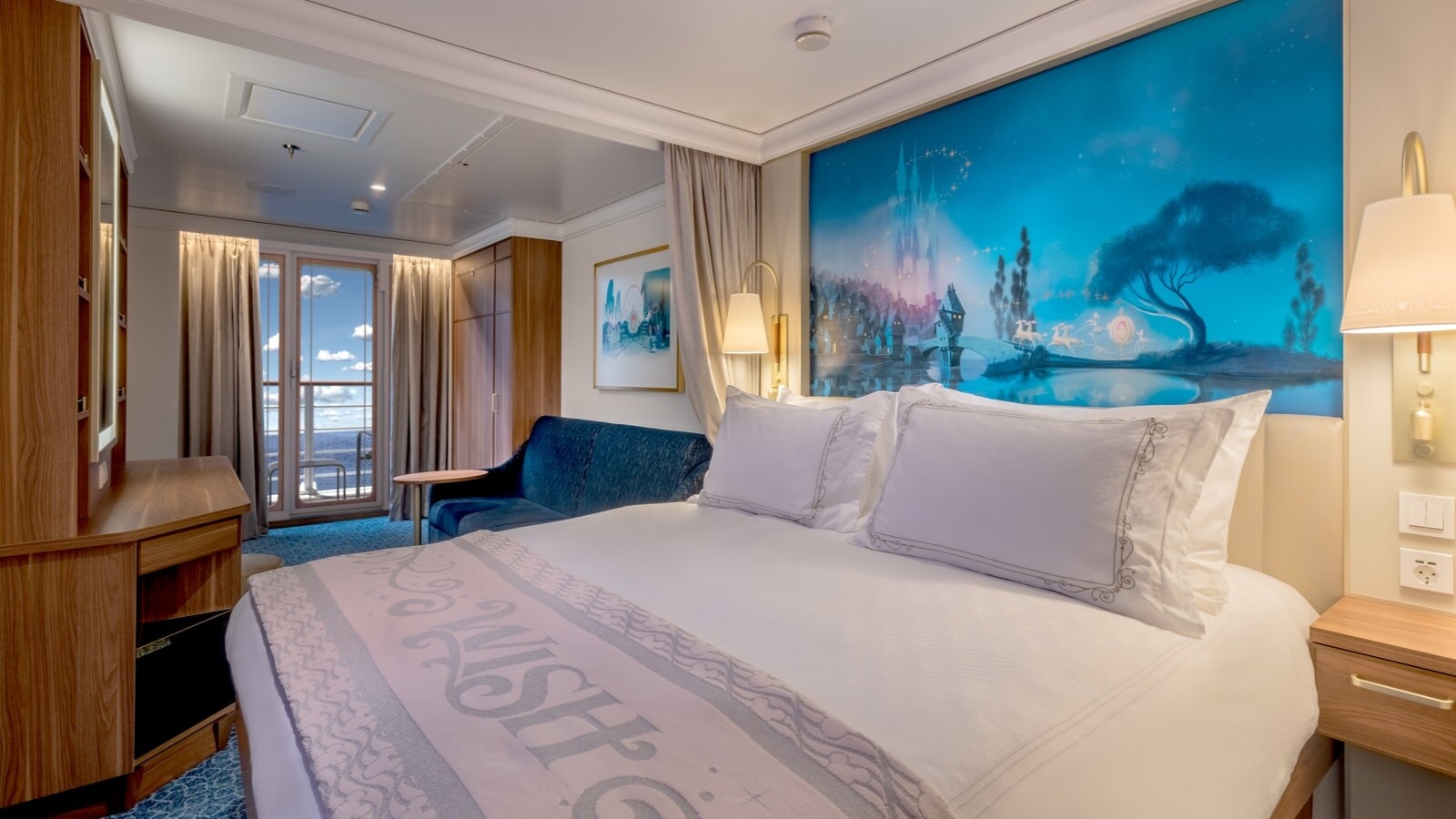
Verandah Stateroom Guarantee
Checking today's price…
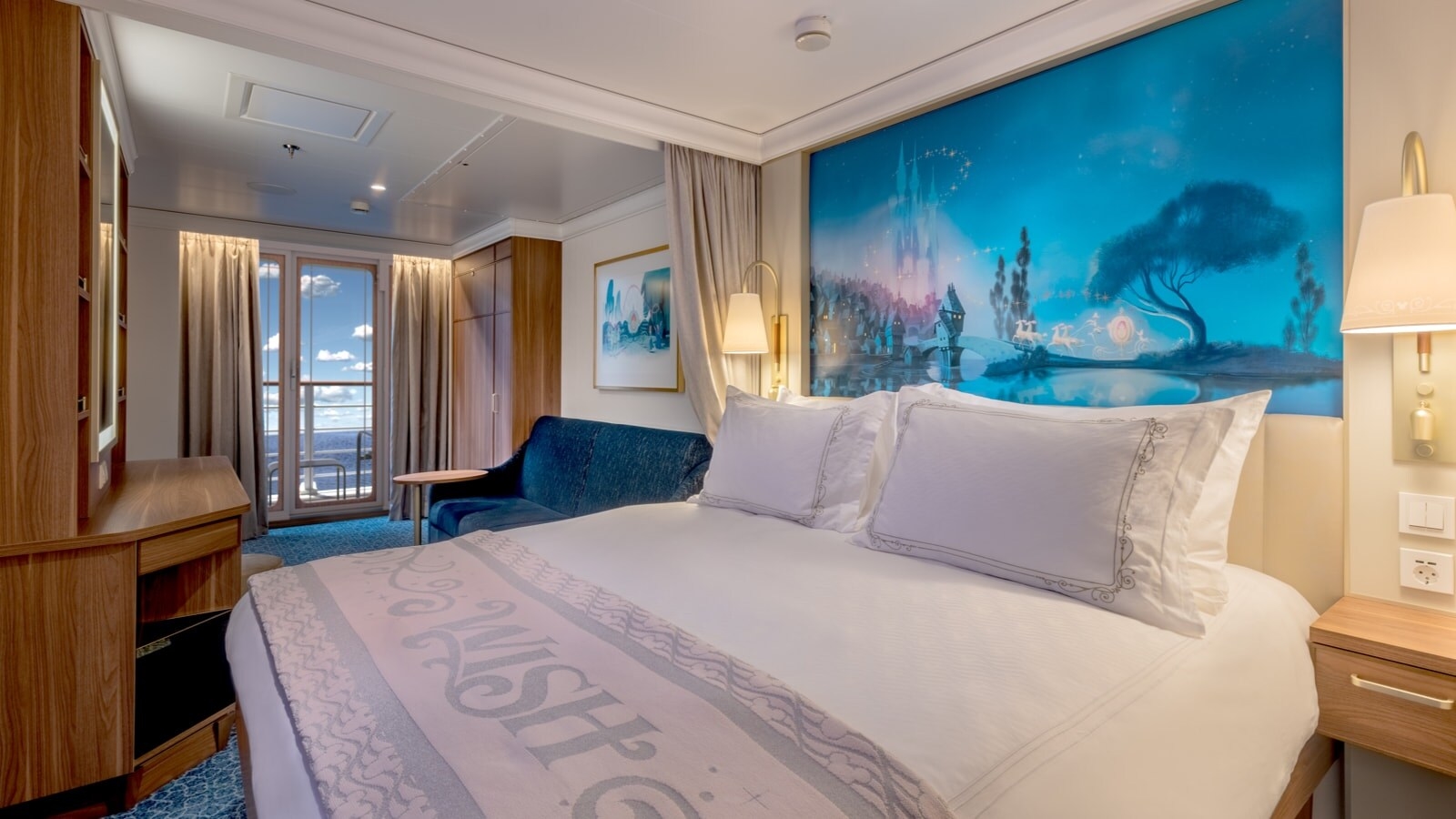
Deluxe Oceanview Stateroom with Verandah
Checking today's price…
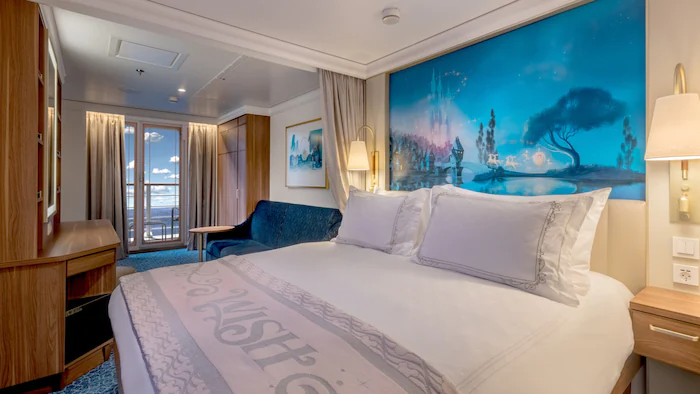
Deluxe Family Oceanview Stateroom with Verandah
Checking today's price…
Verandah
Checking today's price…
Suite8 categories
- , opens to show upcoming sailings and prices for this stateroom
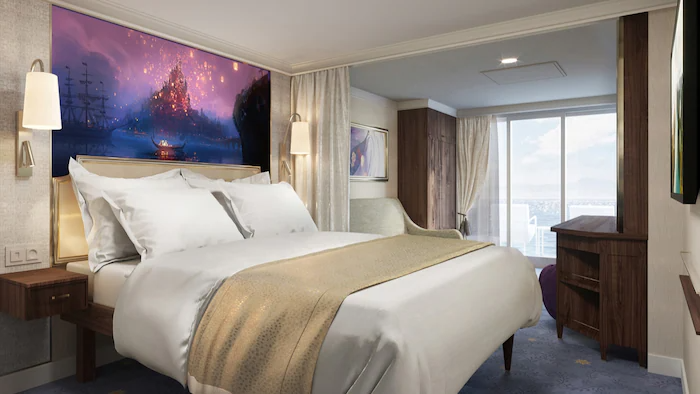
Concierge Family Oceanview Stateroom with Verandah
Checking today's price…
- , opens to show upcoming sailings and prices for this stateroom
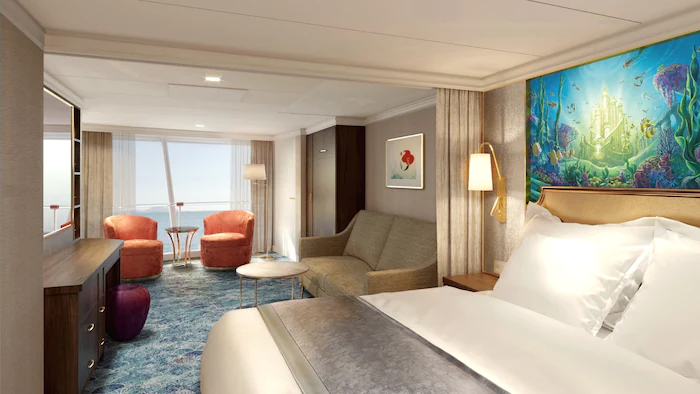
Concierge Family Oceanview Stateroom
Checking today's price…
- , opens to show upcoming sailings and prices for this stateroom
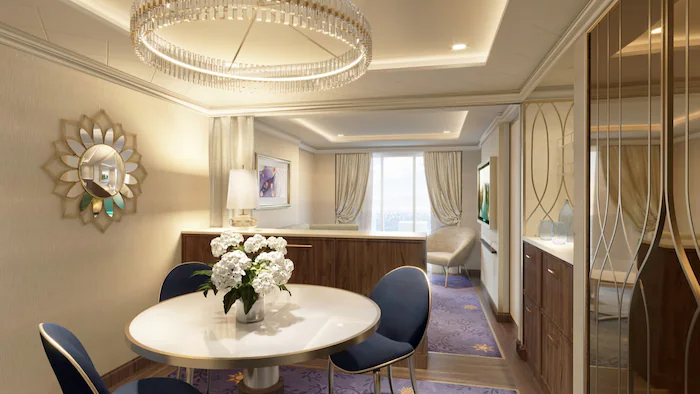
Concierge 1-Bedroom Suite with Verandah
Checking today's price…
- , opens to show upcoming sailings and prices for this stateroom
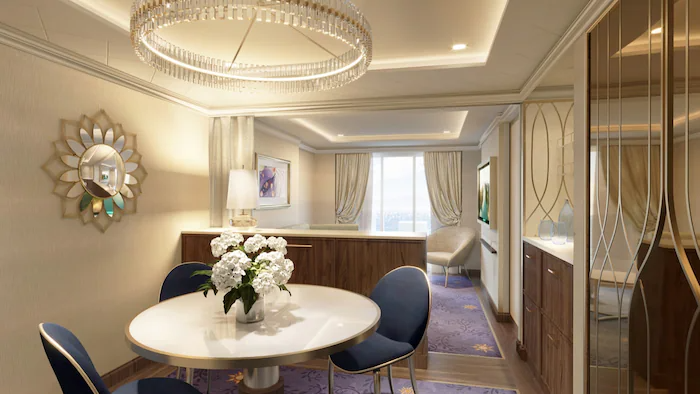
Concierge 1-Bedroom Suite with Extended Verandah
Checking today's price…
- , opens to show upcoming sailings and prices for this stateroom
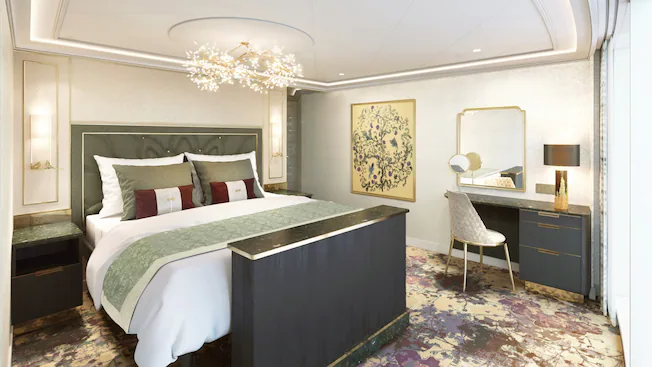
Concierge 1-Story Royal Suite with Verandah
Checking today's price…
- , opens to show upcoming sailings and prices for this stateroom
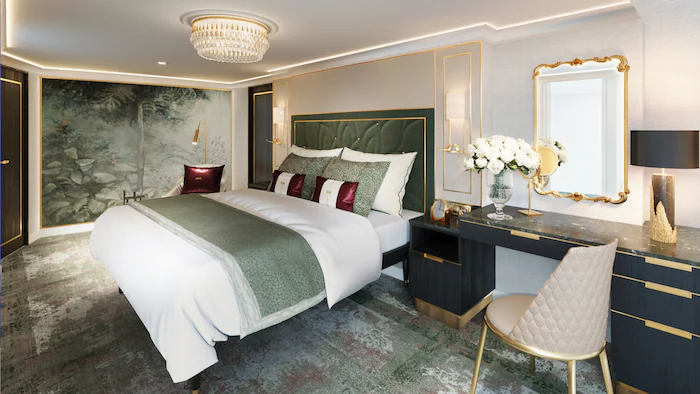
Concierge 2-Story Royal Suite with Verandah
Checking today's price…
- , opens to show upcoming sailings and prices for this stateroom
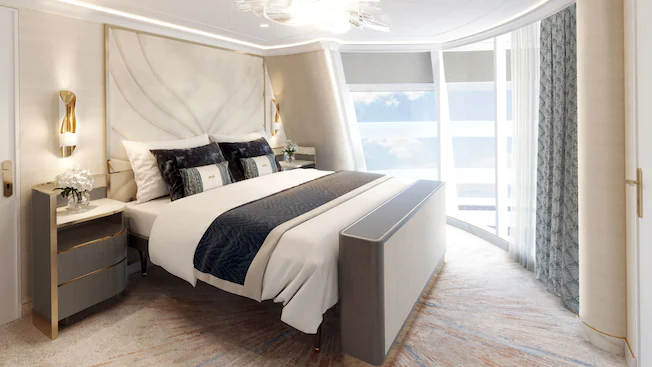
Concierge Wish Tower Suite
Checking today's price…
- , opens to show upcoming sailings and prices for this stateroom
Concierge
Checking today's price…
Disney Wish deck plans
Deck-by-deck layouts for Disney Wish, straight from the line. Useful once you know roughly which cabin you want — open a deck to see where everything sits.
Browse all 14 decks14 decks
Deck 1(1)
 Open zoomable view
Deck 2(2)
 Open zoomable view
Deck 3(3)
 Open zoomable view
Deck 4(4)
 Open zoomable view
Deck 5(5)
 Open zoomable view
Deck 6(6)
 Open zoomable view
Deck 7(7)
 Open zoomable view
Deck 8(8)
 Open zoomable view
Deck 9(9)
 Open zoomable view
Deck 10(10)
 Open zoomable view
Deck 11(11)
 Open zoomable view
Deck 12(12)
 Open zoomable view
Deck 13(13)
 Open zoomable view
Deck 14(14)
 Open zoomable view
Disney Wish is designed for families who want the Disney park experience at sea, with the theming dialed to full intensity
Disney Wish carries 4,000 guests on Caribbean sailings from Miami, shaped entirely by the Disney playbook: immersive theming in every public space, a crew trained in hospitality that feels personal rather than procedural, and entertainment that assumes nothing is too elaborate. Every detail, from the lobby atrium to the kids' clubs to the dining room names, is intentional and themed.
Disney's cruise ships are not first-time-cruiser ships where the ship is the environment and the food is the draw. They're extensions of the Disney theme park business — controlled, designed, and intended to deliver the Disney brand promise in a floating vessel. If you love that promise, Wish executes it at the highest level. If you don't, the relentless theming will feel claustrophobic.
The ship has three main dining rooms (each themed differently, each with different atmosphere and cuisine), plus multiple specialty restaurants and casual quick-service options. The dining rotation system means families move through the ship and experience different venues each night — a deliberate design that supports the theming by always feeling like you're somewhere different.
Kids' clubs are tiered by age and use Disney intellectual property (Marvel, Star Wars, Pixar, Disney princesses) to organize the activities. It's not free daycare — it's a structured program where kids are working through a designed experience, often without realizing they're following a story arc laid down weeks before. Parents who need uninterrupted adult time can find it; parents who want to be involved have programming options for every age level.
Cabins start at inside staterooms (functional, not lavish) and range up to suites. The ship uses modern technology — RFID wristbands as your key, cabin door communication display for messages from crew — in ways that feel magical rather than technological when you're inside the Disney ecosystem.
The fleet operates at the Disney price point, which is higher than mainstream cruise lines. You're paying for the immersive design and the cultural overhead of Disney service standards. Value-first and budget-conscious families will find the cost-benefit calculation difficult. Families who spend $300+ annually at Disney theme parks will find the investment in a Disney cruise feels aligned with their vacation style.
Disney is the best at the integration of family entertainment, but it is family entertainment. Adults-only couples seeking quiet will need to defend their space. Families with adult children (18+) will find Disney less relevant. Guests outside the Disney IP ecosystem — Marvel fatigue, princess-story skepticism, Star Wars apathy — will experience the theming as repetitive rather than immersive.